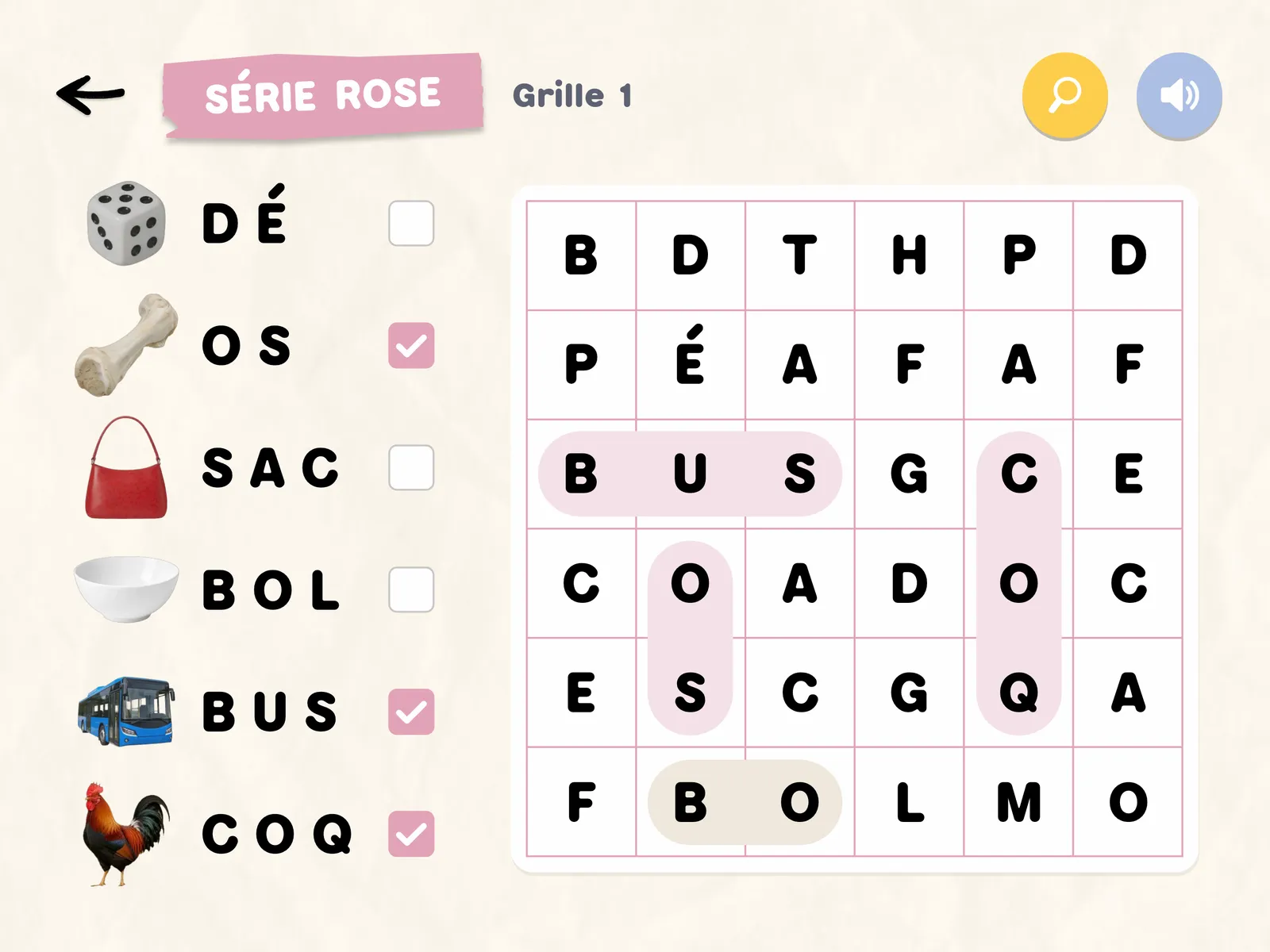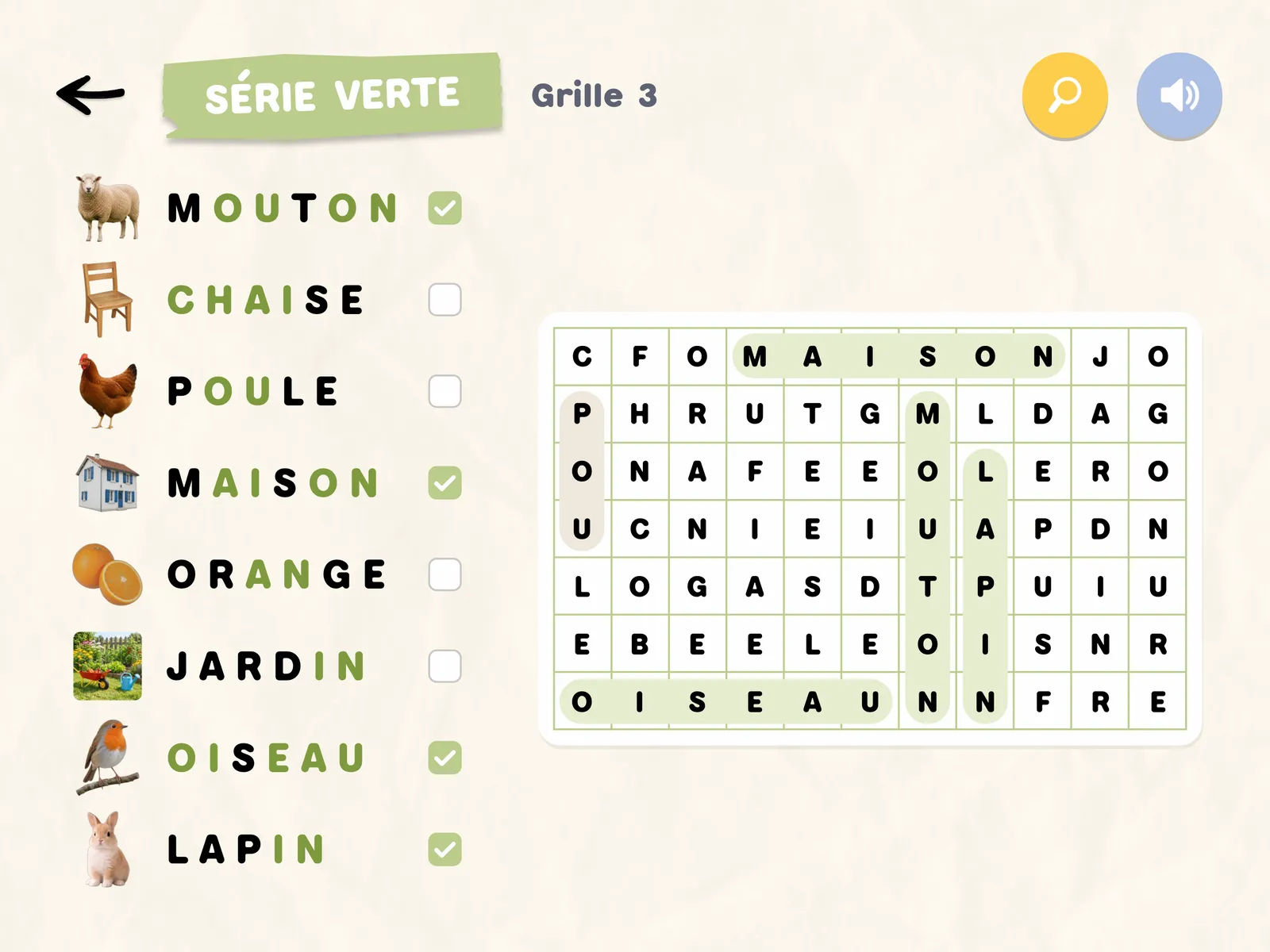
Words sorted into pink, blue or green: these colours appear on many Montessori reading materials. They reflect a way of organising difficulties to support a child’s first steps in reading. Behind these visual cues lies a simple idea: offer words the child can decode with what they already know, then introduce new difficulties one step at a time.
Where do these series come from? What does each stage practise? And how can they be used to support a child’s learning?
A progression developed within the Montessori movement
The pink, blue and green series are indeed used in Montessori practice. Known in English as the Pink, Blue and Green Reading Series, they were developed to adapt reading instruction to the particular features of English.[1]
This organisation should nonetheless be distinguished from what Maria Montessori herself proposed. The three coloured series are not a single method shared by every Montessori school and training course. They are one of the teaching adaptations developed within the movement, and other ways of organising reading instruction exist there too.[2]
In French, the same progression appears in Montessori materials and training: short words for first reading, longer words for further practice, then more complex spellings. The exact lists and the boundaries between series can vary from one author to another.[3]
Three series to build up the difficulties
The pink series supports first reading with short words, usually three letters long, whose letter-sound correspondences are simple and already known to the child. In English, words such as CAT, PIG or SUN let the child blend a few sounds to read a whole word. The aim is to practise decoding: recognising the sounds that letters stand for and combining them to identify the word.[1][3]
The blue series extends this work with longer words, while keeping correspondences the child can manage. Depending on the materials, it may also introduce consonant blends. In English, CRAB, NEST or STAMP show this step up in length. The child has to hold the sequence of sounds in mind and blend more of them without losing the start of the word.[3][4]
The green series tackles more complex spellings, especially groups of letters that together stand for one sound. The letters S and H, for example, form the digraph SH, which spells the sound /ʃ/, as in “shhhh”. Children also meet EE or OA. Depending on the materials, the green series can go beyond digraphs and include trigraphs such as IGH, along with other spelling patterns.[4][5]
Difficulty therefore does not depend on the number of letters alone. SLIP and SHIP both have four letters, yet reading them calls on different knowledge: to read SHIP, the child has to recognise the digraph SH. A short word can call for something the child has not learned yet.
These categories also have to be adapted to each language: the words, sounds and regular patterns of English are not those of French. The same logic of progression applies, but the lists cannot simply be carried over from one language to another.
Supporting decoding and understanding
Before offering a word to read, it helps to check that the child knows the correspondences it requires. Moving from one series to the next depends on what the child has learned and what they need. They may be comfortable with some longer words while still needing support to discover a new digraph.[5]
In Montessori materials, these series take several forms: objects to match with labels, pictures with words, reading lists, or words to build with a moveable alphabet. They make it possible to vary activities around encoding, when the child looks for the letters to write a word, and decoding, when they read a written word.[1]
Understanding remains at the heart of these activities. Once a word has been decoded, the child can match it with an object or a picture, explain what it means or use it in a sentence. These exchanges help connect reading with vocabulary and, for concrete words, build a mental image of what is read.
The value of this organisation lies in its consistency: choosing accessible words, allowing time to practise and teaching new correspondences explicitly. The colours act as landmarks; observing the child is what allows the path to be adjusted.
At MurMur, this progression shapes the design of our reading activities, in our current apps and in those to come: short words for first reading, longer words for further practice, then the introduction of digraphs.
We adapt it to the particular features of each language, in French, in English and in other languages to come. The choice of words and the order of difficulties take into account the sounds and letter-sound correspondences of each one. Children follow the same teaching approach, with content suited to the language they are discovering.
Sources consulted:
- [1] The Helpful Garden, All About the Montessori Pink Reading Series
- [2] Julia Volkman, Maitri Learning, Phonogram Folders & Pink, Blue, Green series
- [3] Sylvie d’Esclaibes, Apprentissage de la lecture
- [4] Montessori Print Shop, Language FAQ’s
- [5] French Ministry of Education, Pour préparer l’apprentissage de la lecture et de l’écriture à l’école maternelle
Try MurMur Picture Dictionary
More than 700 words to hear and observe, in French and in English.