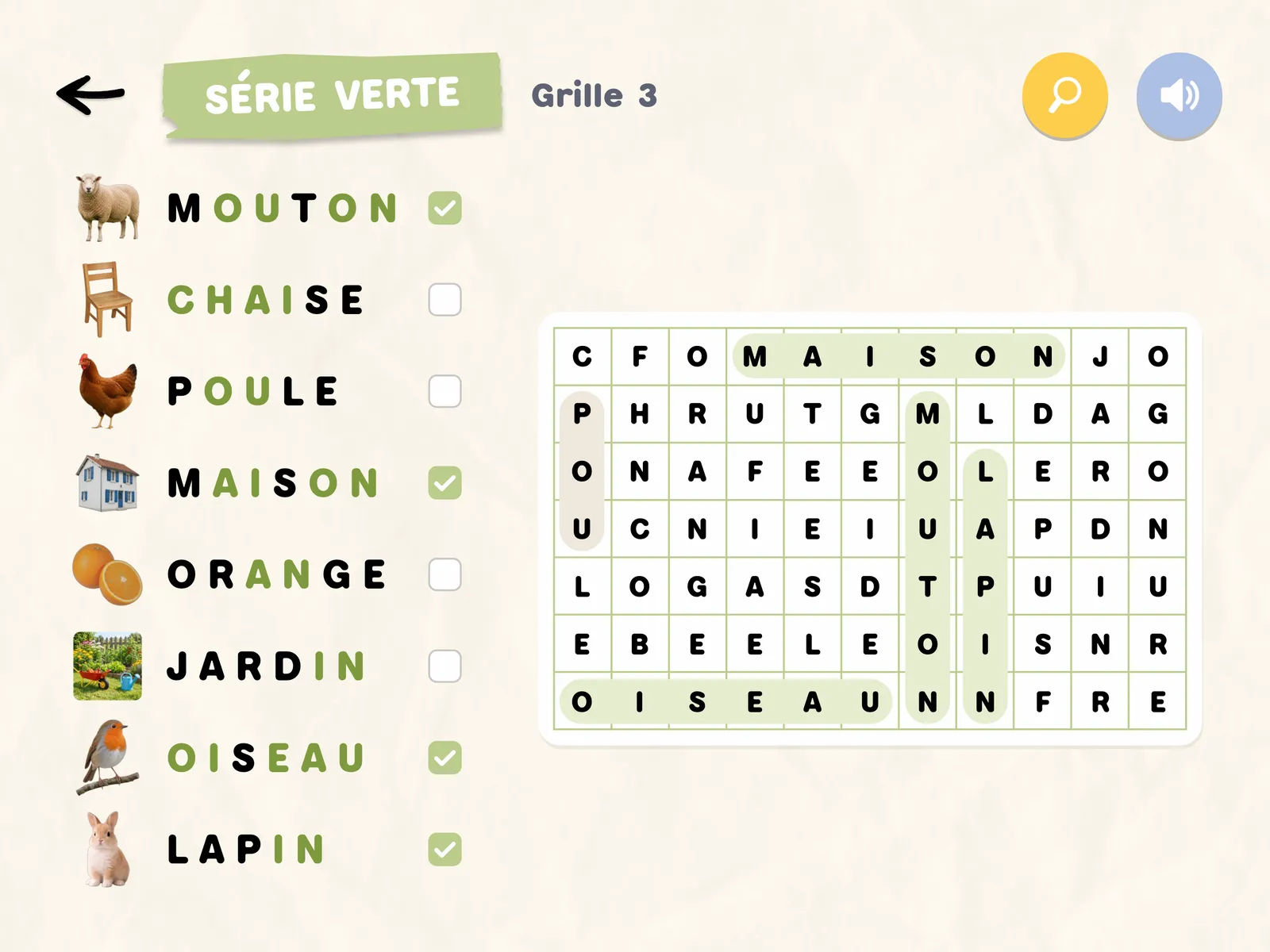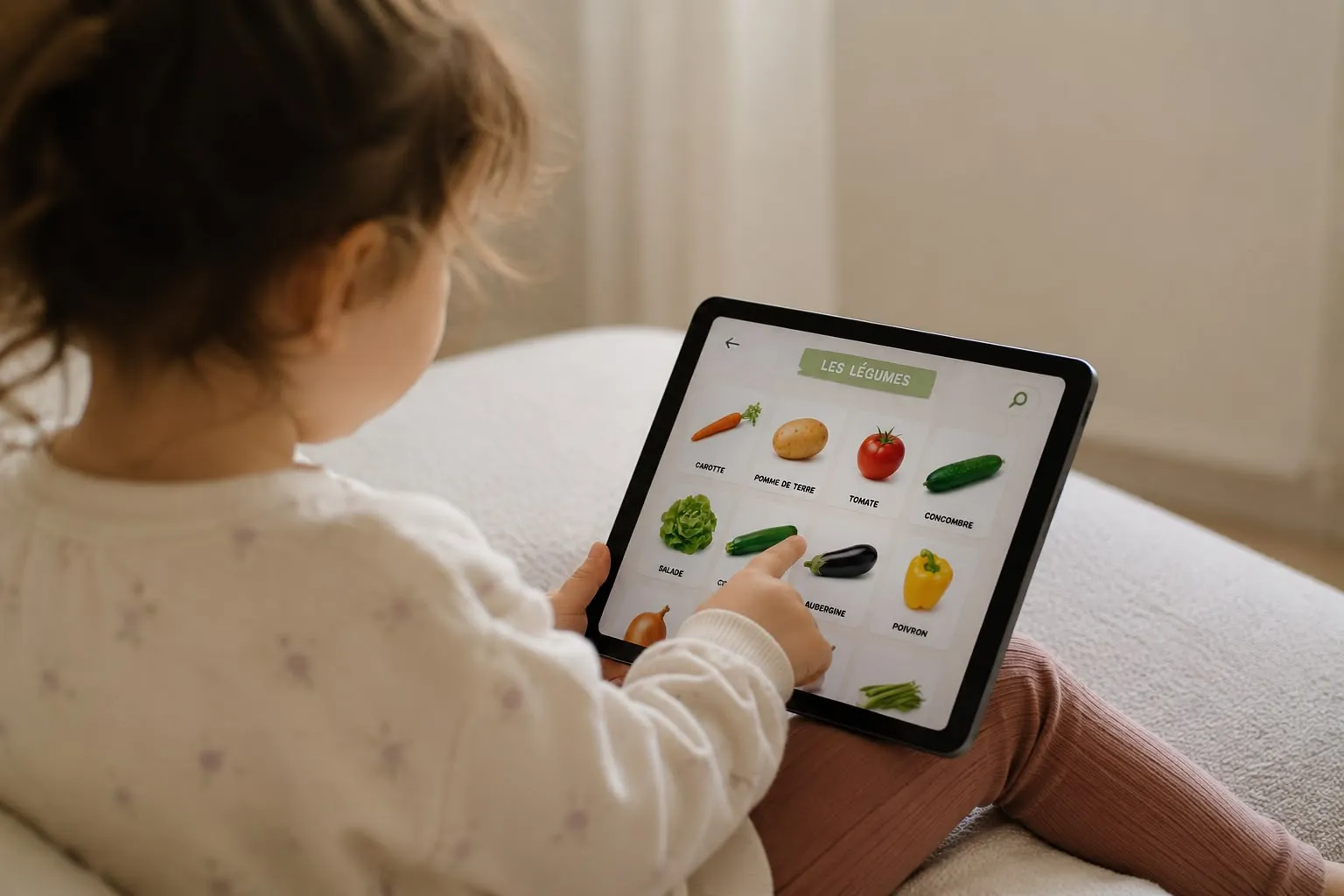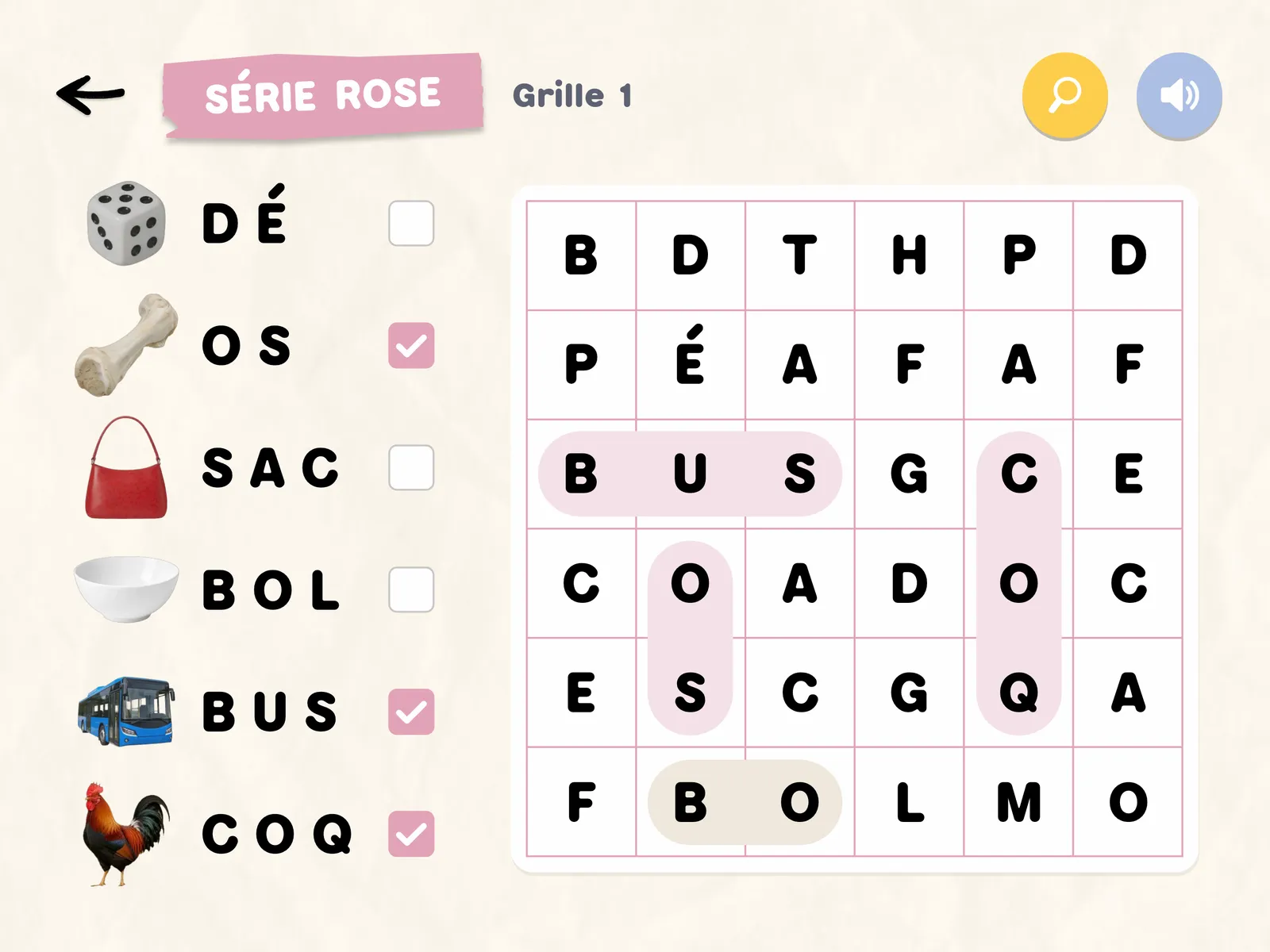
A grid of letters, a few words to find and the pleasure of searching. Simple as they look, word searches can draw on several skills that matter when learning to read: visual discrimination, letter recognition, decoding and understanding vocabulary. Their value for learning depends on the words chosen and on how the activity is offered: with a written model, a picture or a reading instruction, the same game can take on different dimensions.
Looking closely at letters and organising the search
To find BUS in a grid, the child looks at the model, spots a B, then checks that the next letters are U and S. This search calls on visual discrimination, the ability to notice similarities and differences between shapes. The child has to pick out letters among others, tell apart those that look alike and check which way they face. They also pay attention to order: finding the right letters is not enough, they must follow one another in the right sequence.
The activity can go further by playing with different letter forms. A model and a grid both in capital letters, or both in lowercase, practise recognising letters within one style. A model in capitals, such as BUS, with a grid in lowercase where the child looks for bus, also asks them to match the different forms of the same letter. The child then recognises the same word even though the letter shapes have changed.
As they search, children also build a strategy: spot the first letter, check the next ones, scan the grid line by line, or go back to the model when unsure. This visual scanning holds their attention throughout the activity and leads them to test their guesses. A letter seemed right, but the next one does not match? Time to start again and try another lead.
An adult can support this process with a few questions: “Which letter are you looking for first?”, “And right after it?”, “Have you checked the whole word?” An uncluttered grid, a few words and simple search directions make for a gentle start, leaving the child time to observe and the pleasure of finding.
From decoding to understanding
A child can complete a grid by comparing letters with a model, without yet being able to read the word. In that case they are mainly practising visual recognition. For a child who is starting to read, a word search can also become a support for decoding: they use letter-sound correspondences to read the word, then look for it in the grid.
With BLANKET, they can blend the sounds and syllables using the correspondences they have already learned. With SHIP, they also need to recognise that the letters S and H form a digraph: two letters that together spell a single sound, here /ʃ/, which can be stretched out as “shhhh”. The game gives them a concrete reason to put their learning to use: decode a word, find it, then read it again. The words offered should stay in line with what the child knows, so that reading them is within reach.
But decoding does not always mean understanding. A child can sound out BLANKET correctly without knowing what the word refers to: they blend the sounds without yet linking them to a meaning. Reading becomes meaningful when the written word is connected to what it stands for. For a concrete word like this one, that can mean building a mental image: the child pictures the object and links it to everyday experience. Pairing a picture with the word to find gives them something to hold on to, connecting how the word is written, how it sounds and what it means.
This pairing also opens up work on vocabulary. The child may discover a new word, refine its meaning or meet a word they already know. By naming what the picture shows, explaining what it is for or using the word in a sentence, the adult carries the discovery further. “What is it used for? Where might you find one? Have you ever used one?” These conversations connect the word to real situations and encourage its use beyond the game.
Word search is coming soon to MurMur
These are the learning goals behind our new word search app, coming soon to MurMur. It is designed for children who are discovering letters and taking their first steps in reading. Every word to find comes with its picture to support understanding and build vocabulary, in a clean interface that leaves plenty of room for looking and searching.
Its content follows a progression in three series:
- The pink series offers short words read sound by sound, to start with simple words.
- The blue series continues with longer words.
- The green series introduces letter groups that make one sound, such as SH, EE or OA.
Our app builds on the progression of the pink, blue and green reading series used in Montessori education, adapted to the particular features of each language: short words for first reading, longer words for further practice, then the introduction of digraphs. This framework guides the choice and order of the words offered, while the colours mark the different stages.
To learn more about this progression and the learning it supports, read our article on the Montessori pink, blue and green reading series.
Our app carries this idea forward: making word search a moment of play that supports letter recognition, reading and vocabulary, at the child’s own pace.
Sign up to hear when MurMur Word Search launches.
Try MurMur Picture Dictionary
More than 700 words to hear and observe, in French and in English.