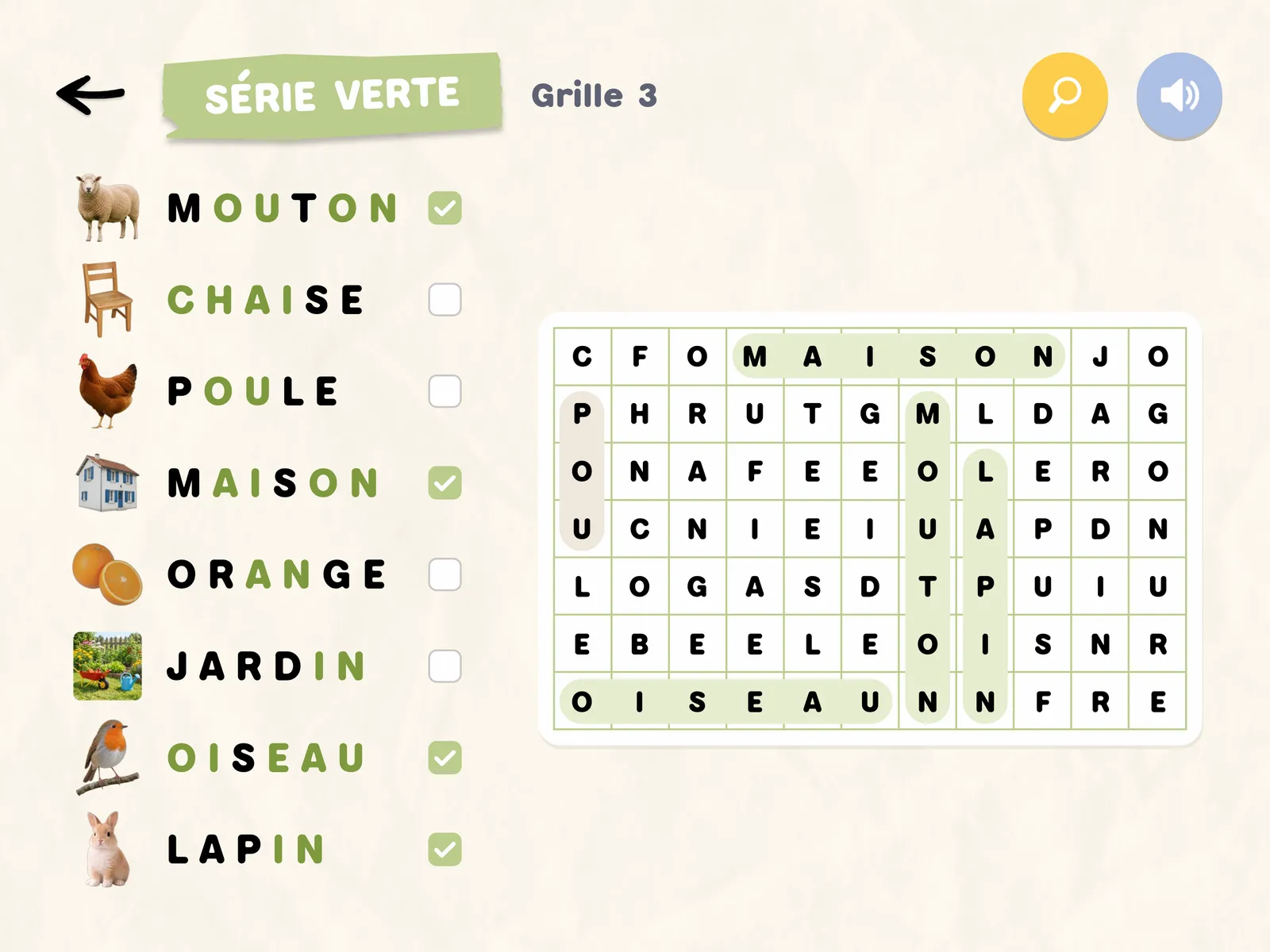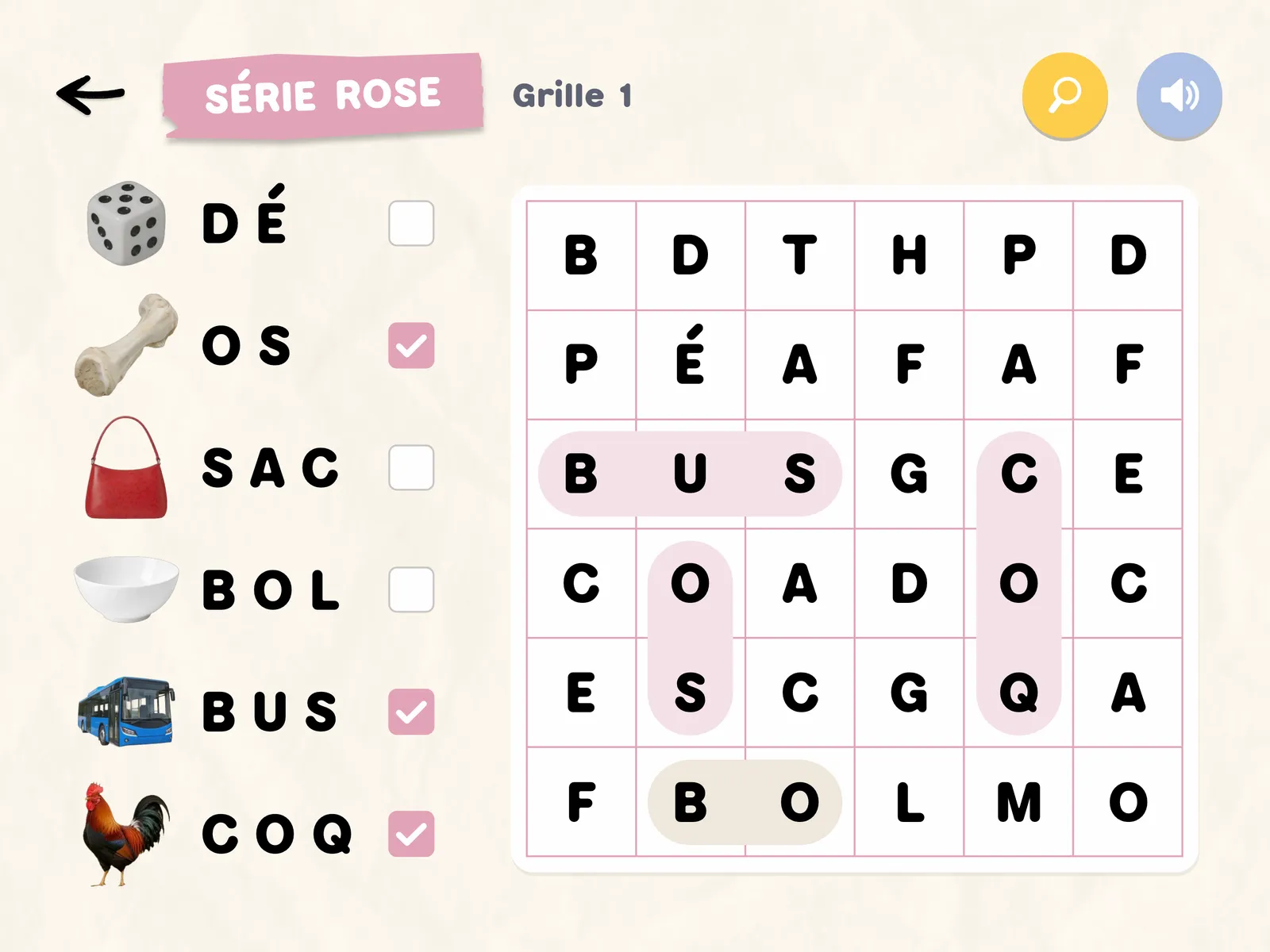
How long? At what time? With what support? Here are simple, guilt-free guidelines to make screen time a calm and genuinely useful moment.
The guideline to keep in mind
Screens are best avoided before age 3. Between 3 and 6, they should remain occasional, with suitable content and an adult alongside. Play, conversation and screen-free experiences come first.
This is the frame in which we design our apps: short moments, chosen by an adult, that add to everything else without replacing it.
The question is not “screen or no screen”
Screens are part of daily life in almost every family. Rather than aiming for a hard-to-hold ideal of “zero screens”, it is more useful to ask: what is my child watching, under what conditions, and what do they get out of it?
A few minutes spent naming everyday objects, listening to words spoken slowly or searching for an image are not the same as a few minutes of a frantically paced cartoon. The content and the support make all the difference.
“A screen is neither a reward nor a punishment. It is a medium. As with a book, what matters is what you choose to put in it.”
Three simple guidelines
- Short, predictable sessions. A few minutes is often enough. Announce the end in advance: a gentle timer beats a negotiation.
- Never right before sleep. Prefer the late afternoon; in the evening, the paper picture book takes over.
- Together whenever possible. Comment, repeat the words, connect them to real life: “Remember, we saw a carrot at the market?”
And after the screen?
The best sign that screen time has been useful: it spills over into real life. The child who points at the alarm clock saying “clock!”, who looks for the neighbour’s cat, or who repeats a word in English has turned the screen into a springboard towards the world.
That is exactly what we try to spark with MurMur Picture Dictionary: real images, useful words, and the urge to go and find them elsewhere.
Try MurMur Picture Dictionary
More than 700 words to hear and observe, in French and in English.